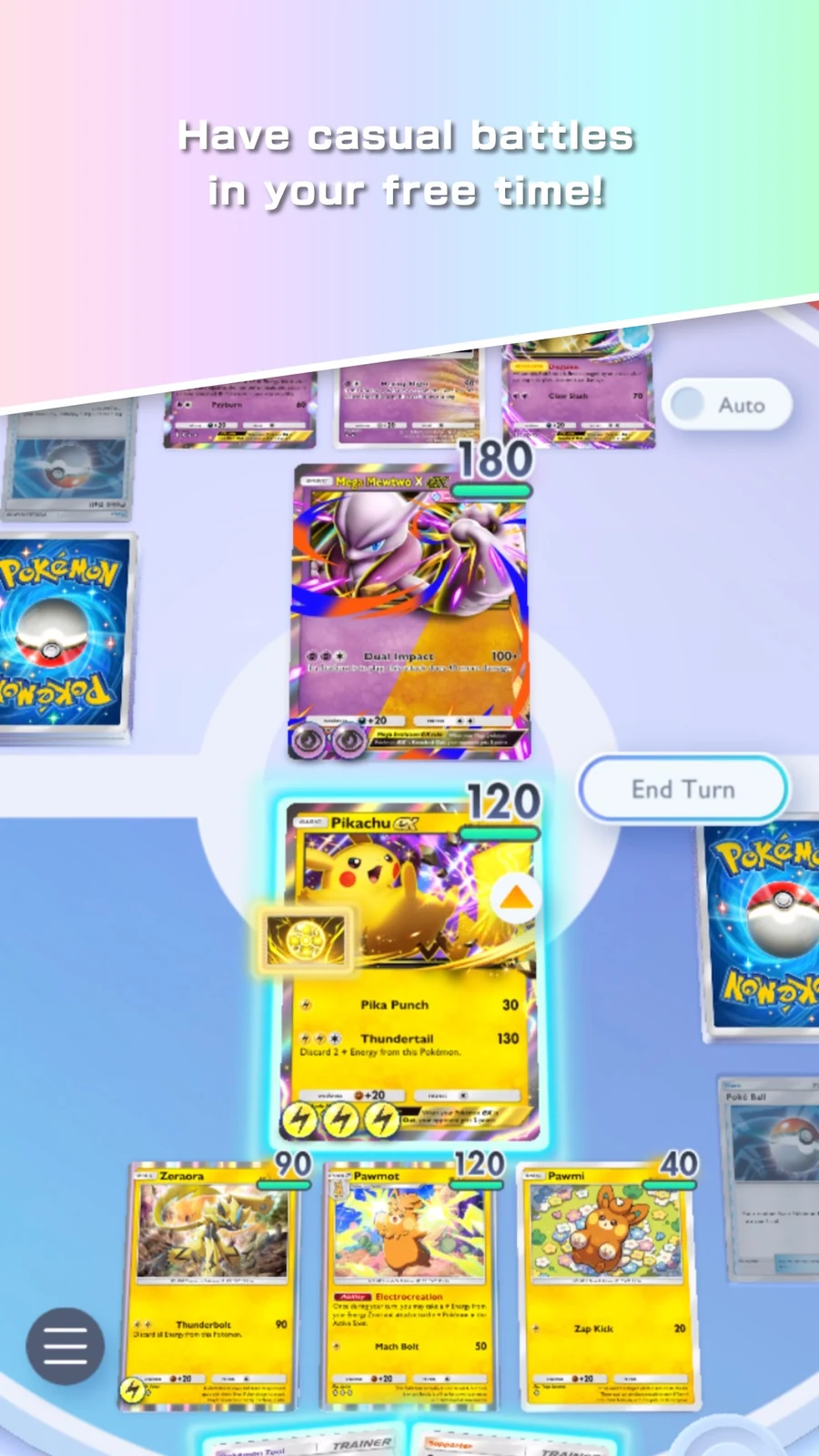
Before attacking in Pokémon TCG Pocket, check active and benched Pokémon, their health, attached Energy, and what each side can do next. Attack when it advances a clear plan; use a setup action when it creates a more useful follow-up and does not leave your active Pokémon exposed.
Read the whole board, not just the active Pokémon
Look at your opponent's bench as well as the active slot: a developing threat may matter more than the easiest target. Check your own backup options and whether your active Pokémon can survive likely retaliation. Review card text or the in-game rules when an interaction is unclear rather than relying on memory. A useful question is what the opponent can do after your move. A large attack is not automatically good if it leaves no follow-up or lets the opponent take a decisive response.
Keep a route to the next attacker
When possible, develop another attacker while the current one applies pressure. Before spending a support or switching effect, consider whether it prevents a likely knockout or improves your next turn. Do not commit every useful option to one Pokémon if losing it would end your ability to respond. After a loss, identify the turn where your choices narrowed and try one adjustment in the next battle. The common error is judging a turn only by immediate damage rather than the position it creates.
Compare the immediate attack with the opponent's likely reply and preserve a workable next turn.
Independent game strategy. Features and progression systems may change between versions.
Published · Updated · GameTrail Editorial
Top up